


{{ secondMenu.name }}




After iSCSI server has been configured, you can create iSCSI virtual disk by click New in Storage > Virtual Storage > iSCSI Virtual Disks, as shown below: 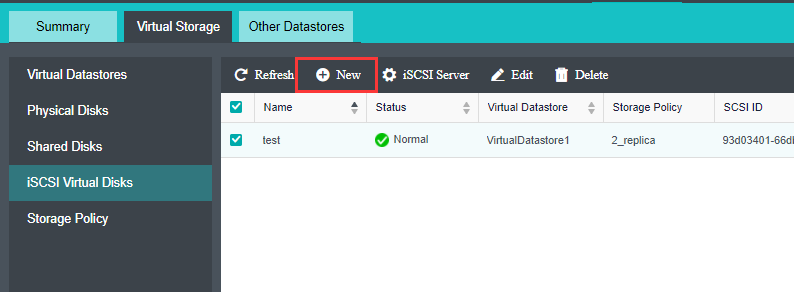
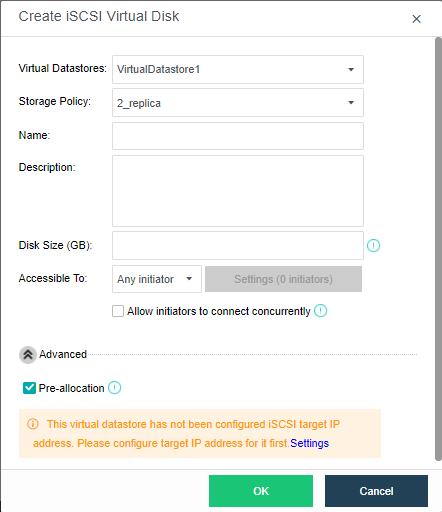
Virtual Datastore: Specifies a datastore for creating iSCSI virtual disk.
Name: It can contain digits, letters, dots and colons only. iSCSI disk name consists of the name specified here and target name prefix which is specified when configuring iSCSI server.
Description: Specifies description for the new virtual disk. It is optional.
Disk Size: Specifies size of the iSCSI disk. The maximum is 48TB(49152GB) and cannot exceed the available storage capacity.
Accessible To: You may select Any initiator or Specified initiator.
Any Initiator: If it is selected, the iSCSI disk can be accessed by any initiator as long as cluster IP address or node IP address, and CHAP username and password are provided correctly.
Specified Initiator: If it is selected, click the Settings (0 initiators) button to configure iSCSI initiator. To add an iSCSI initiator, click Add on the Initiator Settings page to enter the following page.
To enable iSCSI disk to be accessed by multiple initiators concurrently, select the option Allow initiators to connect concurrently: For the sake of data security, that option is deselected by default. Enable this to allow an entire cluster to access, for example, VMware vSphere cluster.
Pre-allocation: It will pre-allocate the iSCSI virtual disk for better performance. However, it will consume more storage space. 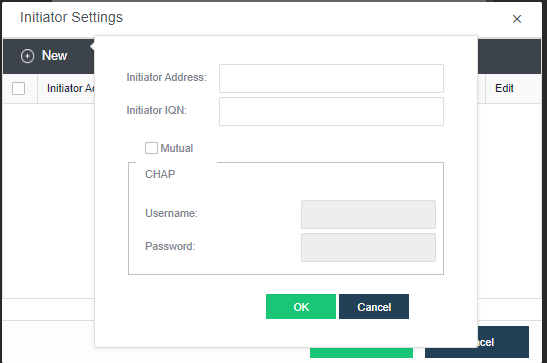
Initiator Address: Specifies management interface address of initiator or cluster IP address.
Initiator IQN: Indicates the device name of iSCSI initiator.
Mutual CHAP: If it is selected, Username and Password fields are required. This option is optional. If mutual CHAP has not been configured on iSCSI initiator, keep this option deselected. iSCSI disk cannot be accessed by iSCSI initiator if the correct CHAP username and password are not provided in case that mutual CHAP has been configured on that iSCSI initiator and that initiator is required to be authenticated by iSCSI server.

One of the two fields is required at least.


 {{ $t('index.defaultHeader.chromeBrowserTip') }}